Find the Best Electronic Kitchen Composter for Apartments
Do you want to turn food scraps into compost easily without taking out the trash? This guide will help you find the perfect electronic kitchen composter for your apartment. You can start composting right from your kitchen or balcony.
We compared different types of compact, electric, and automatic composters for apartment living. You’ll learn about the differences in electric kitchen composters, indoor compost bins, and solutions for small spaces. We’ll show you which features are most important for small homes.
In this article, we’ll discuss the pros and cons of electric thermal units, dehydrators, and bokashi systems. We’ll focus on size, odor control, noise, and energy use. This way, you can pick the best composter for your home and lifestyle.
Key Takeaways
- An electric kitchen composter lets you compost indoors with minimal effort.
- Look for compact indoor compost bin designs that fit apartment counters.
- Evaluate odor control, noise level, and energy use before you buy.
- Different technologies—thermal, dehydrator, bokashi—offer distinct pros and cons.
- Choosing the right unit reduces trash and creates usable compost for plants.
Why Choose an Electronic Kitchen Composter for Apartment Living
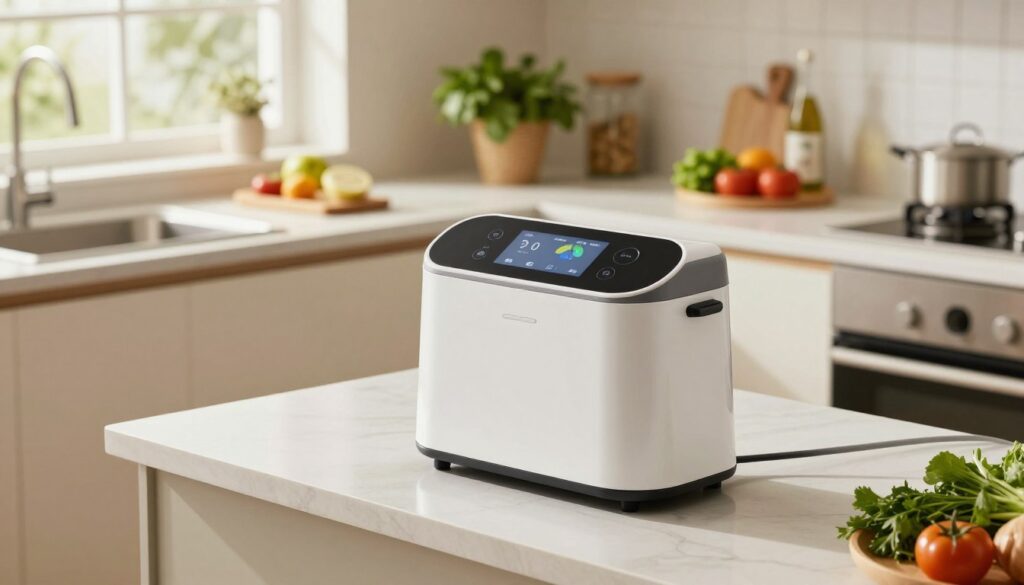
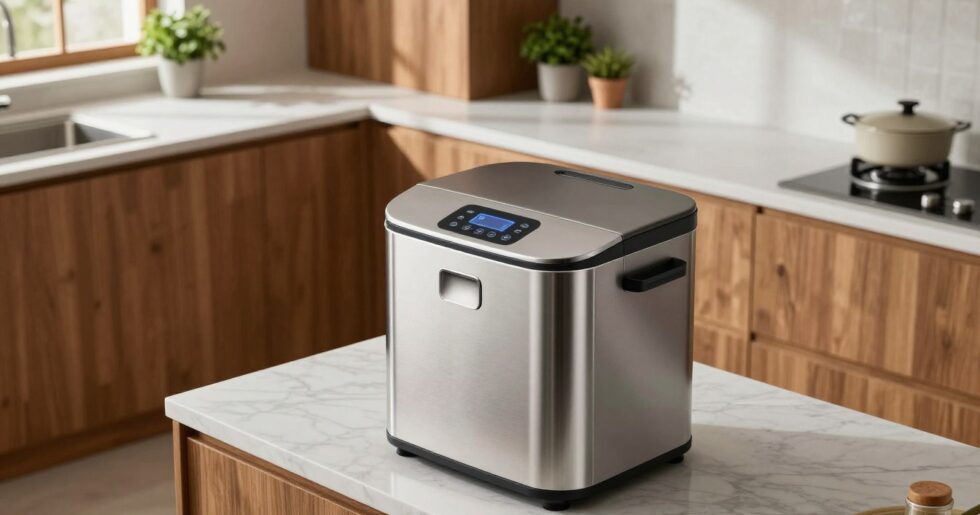
Living in an apartment means making smart choices that fit tight spaces and busy routines. An electric kitchen composter can turn your food scraps into usable material without taking up valuable counter space.
Benefits of an electric kitchen composter in small spaces
Compact composting units sit on a countertop or tuck into a cabinet. They speed up breakdown with heat or controlled airflow, so you make fewer trips to a shared compost drop-off. You cut trash volume and lower disposal costs while getting a cleaner, more consistent output than unmanaged bins.
How apartment composting improves your sustainable lifestyle
Using an indoor compost bin helps you divert organic waste from landfills, which reduces methane emissions. You can repurpose the compost for houseplants, balcony containers, or community garden plots. The routine of adding scraps motivates you to waste less food and plan meals with more care.
Common concerns in apartments and how electronics address them
Smell is a top worry. Electric kitchen composter systems use heat, dehydration, sealed chambers, or activated-carbon filters to neutralize odors. Sealed lids and airtight designs cut pest attraction by removing the scent cues that draw flies and rodents.
Space and noise matter in open-plan units. Compact designs and vertical options fit under sinks or on shelves. Look for models from reliable brands in the electric thermal, dehydrator, or bokashi-style categories that list decibel ratings and size specs.
Real-world use calls for renter-friendly features: portability, non-permanent setup, and easy cleaning. Choosing the right compact composting unit makes apartment composting practical and rewarding for daily life.
Best electronic kitchen composter for apartments
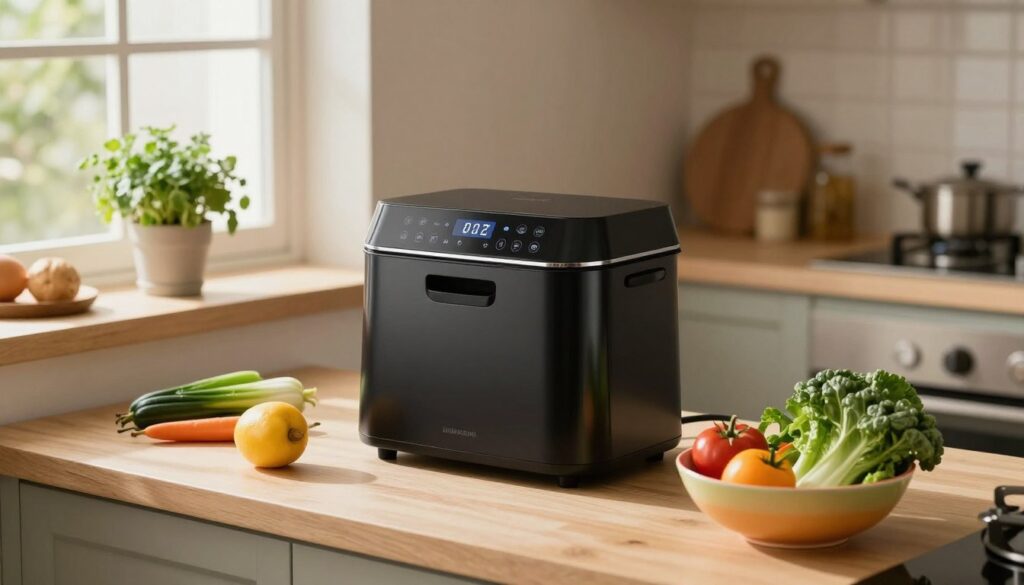
When looking for the best electronic kitchen composter for apartments, consider your lifestyle. Think about how much waste you produce, how much noise you can handle, and if you want compost right away or to finish it outside. Look beyond the marketing to see how well a product really works.
How to interpret the phrase when shopping and researching
Start with claims about speed and odor control. Then, look for independent reviews and lab tests to confirm these claims. Also, read feedback from real buyers to see how a product holds up over time.
Consider the energy use and maintenance needs of the appliance. An eco-friendly composter that uses a lot of energy can increase your bills. Make sure it has easy-to-find replacement parts and clear cleaning instructions.
Key features that make a unit truly the best for apartment living
Choose a composter that fits your space well. It should have a size that matches your household. Look for sealed containers and effective odor filters to keep your kitchen smelling fresh.
Opt for a model with low energy use and clear wattage ratings. If you want compost quickly, look for fast processing times. But, dehydrator-style units that reduce volume are also good. Make sure it’s easy to clean and has good customer support.
Comparing top-rated models marketed with this keyword
There are three main types: electric thermal units, dehydrators, and bokashi-style systems. Electric thermal units break down waste fast. Dehydrators shrink the volume and leave a dry product for soil mixes. Bokashi units ferment most food types, including meat and dairy.
| Category | Strengths | Trade-offs | Best fit |
|---|---|---|---|
| Electric thermal units | Fast breakdown, produces compost-like output | Higher energy use, larger size | Users who want quick results in a kitchen composting system |
| Dehydrators | Volume reduction, dry end-product for storage | May need outdoor finishing, slower biological decomposition | Small households prioritizing low-odor automatic composting for small spaces |
| Bokashi-style electronic units | Handles meat, dairy, and cooked food through fermentation | Requires secondary composting or burying for full breakdown | Renters or apartment gardeners using an eco-friendly composting appliance with limited outdoor access |
Key Features to Look For in a Kitchen Composting System
When picking a kitchen composting system, think about size, speed, sound, and smell. You need a bin that fits your space, a unit that handles your waste, and a composter that’s quiet. Here’s what to consider.
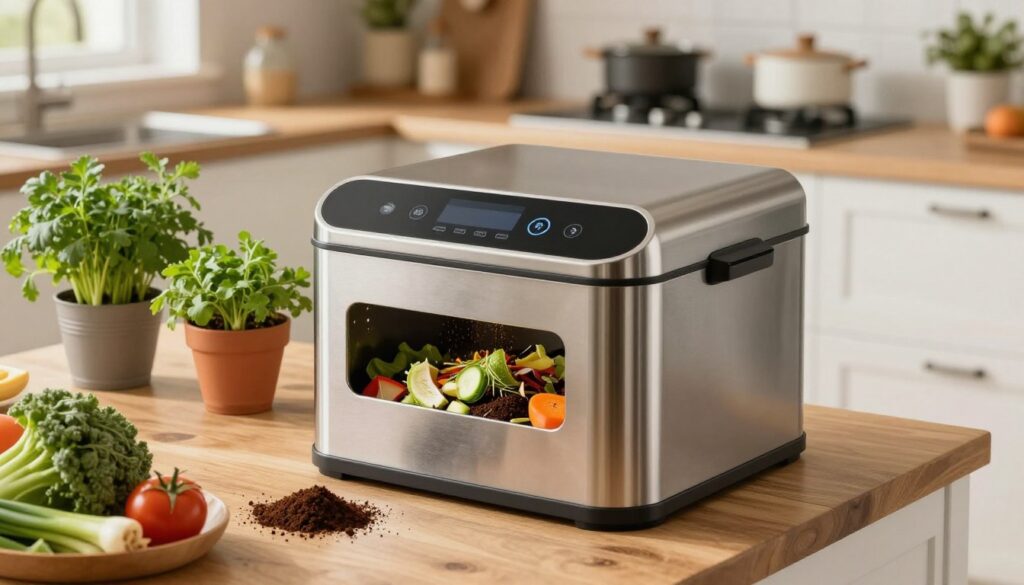
Size and capacity suitable for apartment kitchens
Choose a bin based on your waste. Singles or couples might prefer 2–6 liter bins. But families or those who cook a lot might need something bigger.
Before buying, check your counter and cabinet space. Some bins need extra room to open. Make sure it fits without blocking your sink or appliances.
Processing time and compost output quality
Think about how fast you want compost. Electric models can make dry compost in hours. Thermal models take days or weeks.
Bokashi fermentation takes two weeks. It makes material that needs a final step outside. Choose based on your schedule and gardening needs.
Noise levels, energy usage, and safety features
Look at decibel ratings and reviews for quietness. Insulated and low-RPM designs are best for apartments. Continuous use increases energy costs, so compare before buying.
Check for safety features like UL or ETL certification. Child-locks and automatic shut-offs are important. Also, look for stable and spill-resistant designs.
Odor control, filtration, and biosecure design
Focus on sealed lids, filters, and ventilation to control smells. A good system traps odors and keeps pests away.
Bokashi units have tight seals to prevent smells. Look for antimicrobial coatings and easy-to-clean parts. Clear instructions for safe use are also key.
Top Types of Indoor Compost Bin Technologies for Apartments
Choosing the right indoor compost bin is key. You need one that fits your routine and doesn’t smell. Here’s what each type offers.
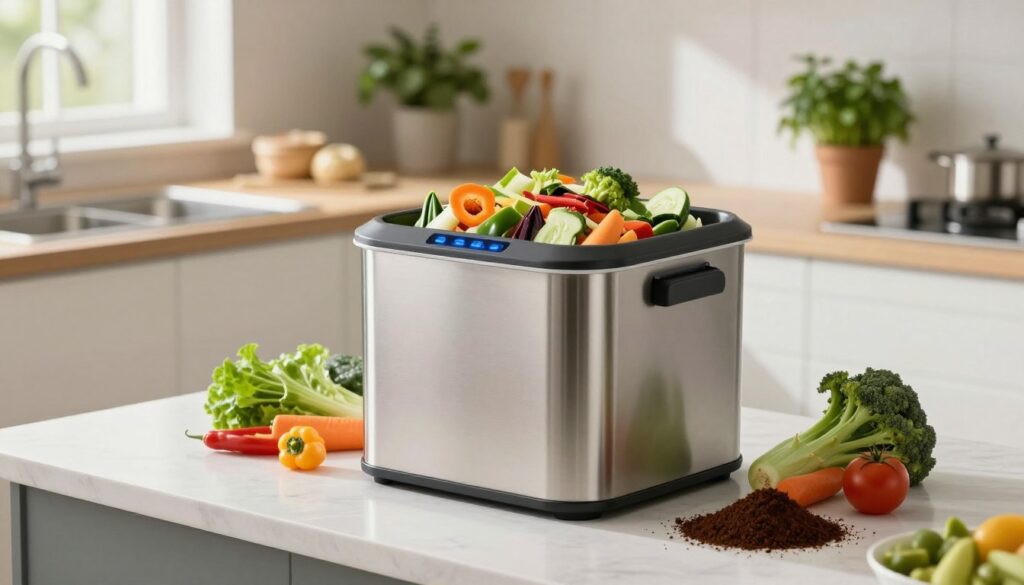
Electric thermal composters use heat and air to break down waste fast. They are great for quick results and less mess. They work well if you want fast compost.
Dehydrators remove moisture quickly. They make waste dry and light, perfect for storing. But, you might need to mix it with soil for plants.
Bokashi-style electronic units ferment waste with microbes. They take meat and dairy and make nutrient-rich compost. You finish it in soil or a worm bin.
Automatic composting for small spaces is easy and keeps smells down. It’s perfect for apartments. But, it costs more upfront and has ongoing expenses.
Space-saving composting technology fits small kitchens well. Vertical units save space, and countertop ones are handy. They make composting easy.
Look for designs that fold or are modular if you rent. Brands like Vitamix offer easy-to-use options. An eco-friendly bin can help you waste less and live better.
When choosing, think about cycle time, finishing needs, costs, and space. This helps you find the best bin for your apartment.
How to Choose the Right Compact Composting Unit for Your Apartment
Choosing the right compact composting unit starts with knowing what you throw away. Keep track of your kitchen scraps for a few days to figure out how much you have daily. This helps you pick the right size and whether you need compost for plants or a pre-treated product.
If you have meat, dairy, or cooked foods, pick a system that can handle them. Bokashi setups can take more types of waste. For just fruit and veggie scraps, thermal or dehydration models are better. Make sure the unit fits your waste to avoid problems.
When looking at electric kitchen composters, think about power and cost. Check the wattage, how often it runs, and estimated monthly kWh. Use your local electricity rate to figure out the monthly cost to avoid surprises.
Look for features that save energy like timers and eco-modes. Units that run in cycles use less power than those that heat continuously. If saving energy is important, compare the specs before buying.
Each composting system has different maintenance needs. Find out if parts are dishwasher-safe and how often filters need changing. Easy-to-clean designs help prevent mold.
Ask about extra costs for things like carbon filters and bokashi bran. Also, check the warranty and customer support from brands like Vitamix, FoodCycler, or Lomi. This ensures you can get parts when you need them.
Renters should look for units that are easy to move and don’t need to be installed permanently. Choose lightweight, freestanding models that you can take with you. Avoid units that require plumbing or electrical work in your apartment.
Check your building’s rules or HOA policies before buying. Keep receipts and product details ready to show management. If neighbors complain, show them how the system controls odors with sealed chambers and filters.
| Consideration | What to Check | Why it Matters |
|---|---|---|
| Waste volume | Estimate daily scraps; choose capacity (small, medium, large) | Prevents overfilling and reduces maintenance frequency |
| Waste types | Fruit/veg only or includes meat/dairy; choose technology (thermal, bokashi) | Ensures proper processing and avoids odors or pests |
| Energy use | Wattage, duty cycle, kWh/month, eco-modes | Controls monthly cost for your electric kitchen composter |
| Cleaning & parts | Dishwasher-safe parts, filter life, spare part availability | Reduces downtime and long-term expenses |
| Portability | Weight, freestanding design, no permanent hookups | Makes it renter-friendly and easy to relocate |
| Building rules | HOA or landlord policies, odor-control proof | Avoids fines and neighbor complaints for apartment composting solution |
Where to Buy and Try Eco-Friendly Composting Appliances
Finding the right eco-friendly composting appliance for your apartment is easier when you know where to look. Start with major retailers in the United States. They offer clear return policies and shipping options. You can compare specs, warranty details, and support before you buy.
What to look for in product listings and customer reviews:
- Verify dimensions, capacity, and power draw; confirm included accessories and replacement filter types.
- Prioritize verified photos, unboxing videos, and long-term reviews that discuss odor control, noise, and reliability.
- Note mentions of consumables like filters or inoculants, return policies, and how responsive manufacturer support is to warranty claims.
When reading reviews, focus on repeated experiences rather than single outlier comments. Pay attention to reports about maintenance time and the true output quality of compost. These details show whether a unit will meet your expectations.
Conclusion
Choosing the right electronic kitchen composter for your apartment depends on a few things. First, think about how much waste you produce. Then, consider what kind of compost you want and how much space you have. Look for a unit that’s compact and fits well in your kitchen.
It should also control odors well and match your lifestyle. Options include thermal, dehydrator, or bokashi methods. Each has its own benefits.
When comparing systems, remember to look for energy efficiency and low noise. Easy maintenance is key too. A good composter should be simple to clean and have parts that can be replaced.
Start by measuring your food waste and setting a budget. Look at different models and read reviews. Check On Amazon for the latest deals.
Begin with a small, well-reviewed composter. Learn your routine with it. Then, you can upgrade or add more steps like worm bins or community composting.
FAQ
What is an electronic kitchen composter and why is it good for apartments?
An electronic kitchen composter is a small, powered device that breaks down food scraps quickly. It’s perfect for apartments because it’s compact and doesn’t take up much space. It also reduces trash, controls odors, and pests, and makes a clean output for plants or gardens.
Which types of indoor composting technologies work best in small spaces?
There are three main types: electric thermal units, dehydrators, and bokashi-style fermenters. Each has its own benefits for small spaces. Thermal units are fast and clean, dehydrators are easy to use, and bokashi is versatile. Choose based on your needs and space.
How do I choose the best electronic kitchen composter for my apartment?
First, measure how much food waste you have and how much space you have. Look for compact, odor-controlling, quiet, and energy-efficient units. Decide if you want compost right away or a product to finish later. Check warranties and reviews from places like Amazon or Home Depot.
Will an indoor electric composter smell or attract pests?
Good indoor composters don’t smell or attract pests. Look for units with sealed chambers and filters. Quick processing or anaerobic fermentation (bokashi) also helps. Regular cleaning and following the manufacturer’s advice will keep odors and pests away.
How much noise and energy should I expect from a compact composting unit?
Noise levels vary by model. Many are designed to be quiet, but check the decibel rating. Energy use depends on the unit’s power and how often it’s used. Look for specs and eco-modes to estimate costs.
Can I compost meat, dairy, and cooked food in an indoor system?
Not all units can handle meat, dairy, and cooked food. Bokashi units can, because they ferment anaerobically. Thermal and dehydrator units might accept cooked foods, but always check the manufacturer’s guidelines to avoid odors and hygiene issues.
How long does it take to produce usable compost from an electronic kitchen composter?
Processing times vary by technology. Dehydrators can dry food in hours, while electric thermal units take days to weeks. Bokashi fermentation takes about two weeks, then needs outdoor finishing. Choose based on your needs.
What maintenance and replacement parts should I expect?
You’ll need to clean the unit regularly and replace filters or consumables as needed. Check if parts are dishwasher-safe and how often they need replacing. Good warranties and customer support help with long-term care.
Are apartment composting appliances renter-friendly?
Yes, look for lightweight, portable units that don’t require installation. Choose designs that are easy to store and won’t break lease terms. Check building rules about odors and waste processing before buying.
Where can I buy and try eco-friendly indoor composting appliances in the United States?
You can buy from Amazon, Home Depot, Lowe’s, or manufacturer websites. Some local stores or programs offer demos or rentals. Make sure to check dimensions, power specs, and reviews before buying.
What are the common trade-offs of automatic composters for small spaces?
Automatic units are convenient, reliable, and control odors well. But they cost more upfront and may have ongoing expenses. Consider the convenience against long-term costs and your waste volume.
How should I evaluate a product listing or review for an apartment composting solution?
Look for real photos, verified buyer feedback, and clear specs. Check for generous return policies and customer service. Compare reviews across different sources to confirm performance.
Can indoor composters really reduce my trash volume and environmental impact?
Yes, they divert organic waste from landfills, reducing methane emissions and trash pickups. They also provide nutrient-rich material for plants or gardens, supporting sustainable habits.