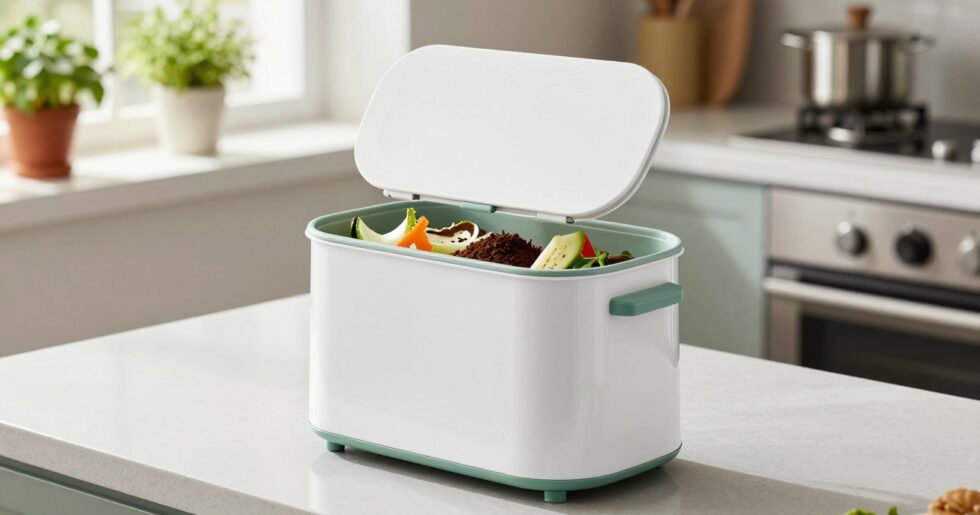
Ultimate guide to electric kitchen composters features pros & top models
Welcome to our Ultimate guide to electric kitchen composters. Here, you’ll learn if an electric composter is right for you. We’ll cover what to expect from this guide.
You’ll discover what an electric kitchen composter is and how it works. We’ll also highlight the key features to look for in 2026. Our guide compares the best electric composters and reviews top models.
Interest in composting at home is growing in the U.S. Cities are starting new waste-reduction programs. Urban gardening is becoming more popular. Companies like FoodCycler and Lomi by Pela are leading the way.
This guide focuses on electric composters for U.S. homes and apartments. You’ll find comparisons, a feature checklist, and practical advice. Whether you want to reduce landfill waste or speed up composting, we’ve got you covered.
Key Takeaways
- You will learn how electric kitchen composters work and which features matter most.
- The guide compares the best electric kitchen composters and top electric composting machines for different needs.
- Content focuses on countertop and under-counter electric kitchen compost bins popular with U.S. residents.
- Expect practical buying advice, pros and environmental benefits, and real-world reviews.
- This guide helps you pick a model that fits your space, budget, and composting goals.
Ultimate guide to electric kitchen composters features pros & top models
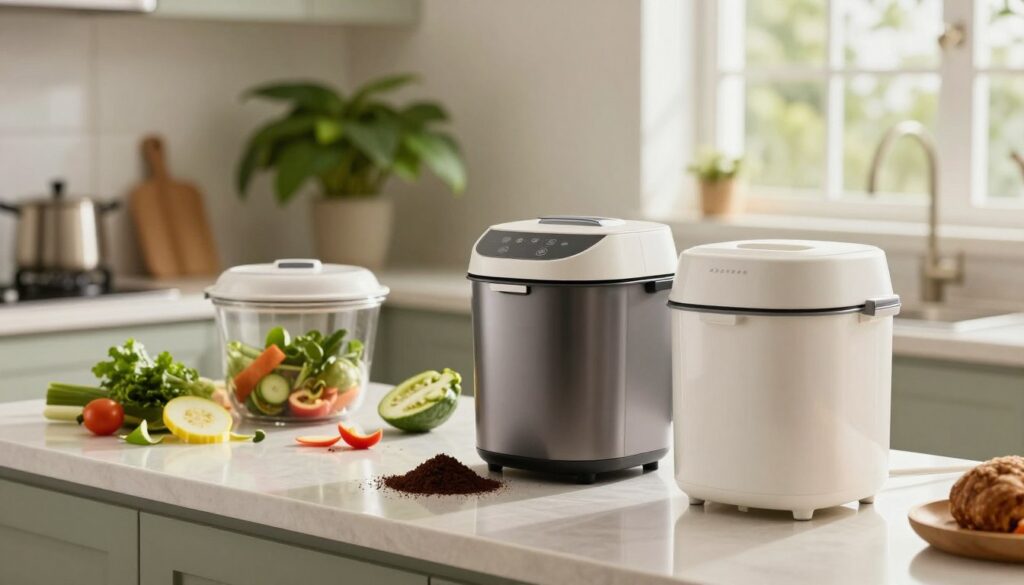
In this section, you’ll learn about electric kitchen composters. You’ll discover their core technologies and who benefits from them. This will help you decide if an electric composter is right for you.
What an electric kitchen composter is and how it works
An electric kitchen composter is a small appliance that breaks down food scraps quickly. It uses heat, air, grinding, and drying to reduce waste. This turns food into a soil amendment or a small amount of residue for your garden.
Countertop models often use fast aerobic composting or dehydration and grinding. Under-counter units may run longer cycles and produce finer output. Cycle times range from 8–24 hours for small machines to several days for larger systems.
You can compost fruit and veggie scraps, coffee grounds, eggshells, small bones, bread, and cooked leftovers. But, avoid large meat, heavy grease, sick plants, and big bones. Always check your composter’s manual for specific guidelines.
Key components and technologies to know
Heating elements raise the temperature to speed up decomposition or drying. The temperature varies by method and brand.
Agitators, tumblers, and grinders break down particles for faster breakdown. This boosts efficiency and texture.
Filtration and odor control are key for kitchen use. Look for activated carbon filters, sealed lids, and ventilation systems. Some models have HEPA-like layers for better control.
Sensors and smart controls monitor moisture, temperature, and fill level. Newer models connect to apps for remote control, alerts, and updates.
Energy usage and safety features differ. Expect various wattages, auto-shutoff, child-locks, and thermal cutoffs in top models.
Who should consider an electric composter for their kitchen
Apartment dwellers and city residents needing a controlled indoor solution should consider an electric composter. It’s perfect for places without outdoor composting options.
Busy families wanting fast, year-round composting without outdoor work benefit from these devices. They get quick results and less kitchen waste.
Gardeners and potted-plant enthusiasts needing steady compost will find value. A small electric composter provides nutrient-rich material when needed.
Those with limited curbside composting or no outdoor space find electric composters a convenient alternative. Many also consider long-term savings over frequent trash removal or paid services.
Top electric kitchen composter models and top rated electric kitchen composters
Choosing the right unit can change how you handle food waste. Below is a guide to match capacity, speed, odor control, and cost to your kitchen and lifestyle. Use these comparisons to narrow choices among top electric kitchen composter models and top rated electric kitchen composters.
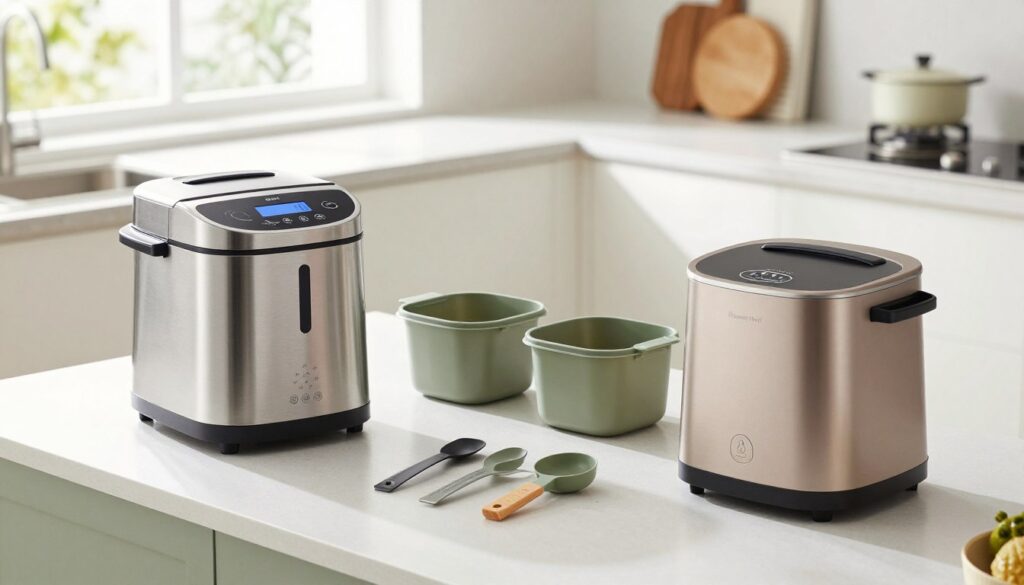
Top models by capacity and kitchen size
For singles or couples, small countertop units with 1–3 liter cycles fit tight spaces and run quickly. FoodCycler’s compact variants and Lomi mini-style models are strong small-footprint options to consider.
If you run a large household or need continuous processing, look at 8+ liter under-counter or whole-kitchen machines. Domestic or commercial-style devices deliver higher throughput but need extra space and power. Match capacity to your daily waste—estimate cups per person per day to pick the right size.
Top models for speed and odor control
Fast-cycle machines aim to finish a cycle in a single night, typically 8–12 hours, while other units dry and reduce mass over 24 hours. Lomi Pro and some FoodCycler claims list shorter cycle times that appeal to users who want near-instant results.
Odor control matters when you keep the unit in the kitchen. Look for sealed chambers, activated-carbon filters, and engineered airflow. Some models advertise internal UV or ozone treatments to cut smells. FoodCycler and Lomi emphasize filter systems and sealed processing in marketing and specs.
Expect tradeoffs: faster cycles can draw more power, and aggressive grinding speeds may increase noise. Balance cycle time against energy use and acceptable sound levels for your home.
Budget-friendly vs premium top rated electric kitchen composters
Budget-friendly options lower the barrier to entry. Entry-level FoodCycler variants and repurposed countertop dehydrators cost less up front. You may trade off capacity, automation, and filter life, and perform more manual maintenance like frequent filter swaps.
Premium models bring larger capacity, smarter controls, quieter motors, app connectivity, and longer warranties. Lomi Pro/XL and higher-end offerings process tougher waste and give more consistent results. Premium units often have superior odor control and reduced hands-on upkeep.
Consider total cost of ownership when you compare price tiers. Add energy use, replacement filters, liners or bins, and expected lifespan to the purchase price to see which top electric composting machines make the best long-term sense for your household.
Best electric kitchen composters: features to look for in 2026
When picking the best electric kitchen composters, match the machine’s features to your lifestyle. Look at capacity and cycle flexibility to fit your daily needs. Also, consider noise, energy use, and safety to ensure it works well in your kitchen.
Maintenance and cleaning are key. They decide if you’ll keep using the compost bin or let it gather dust.
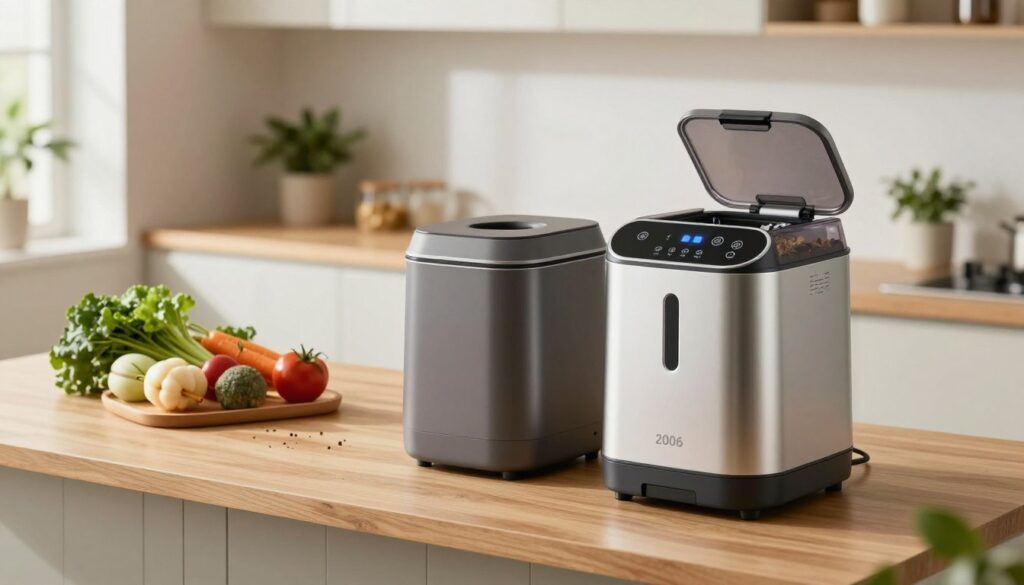
Capacity, cycle time, and processing method
First, figure out how much food waste your household makes. A 3–5 liter model is good for two to three people. Larger units are needed for bigger families.
Choose a model that allows for some extra space. This way, you won’t have to run full cycles every day.
Cycle times vary from 8–24 hours for countertop models to several days for high-end ones. Look for customizable cycle lengths if your waste changes.
Processing methods affect output and smell. Dehydration and grinding reduce volume quickly. Heat and aeration make biologically active compost. Hybrid models offer the best of both worlds.
Noise levels, energy use, and safety features
Check the decibel rating for quiet operation. Units under 50 dB are usually quiet enough for a kitchen. If noise is a concern, test or read reviews before buying.
Compare the energy use per cycle. This helps estimate monthly costs. Countertop models use less power, but frequent use adds up. A quick energy check can prevent surprises on your bill.
Look for safety features like auto-shutoff, thermal protection, and child locks. Parts should be BPA-free and non-toxic. These features are common and keep your family safe.
Maintenance, cleaning, and ease of use
Check the filter and liner systems. Look for units with affordable filters or reusable trays. Find out how often filters need to be replaced and if liners are easy to find.
Cleaning is easier with removable, dishwasher-safe bowls. Non-stick surfaces and easy access reduce scrubbing. Durable parts and clear instructions make maintenance simple.
User interfaces should be simple. Look for clear controls, cycle indicators, and smart alerts for maintenance reminders. A good warranty and customer support are crucial when choosing a compost bin.
Electric kitchen composters pros and environmental benefits
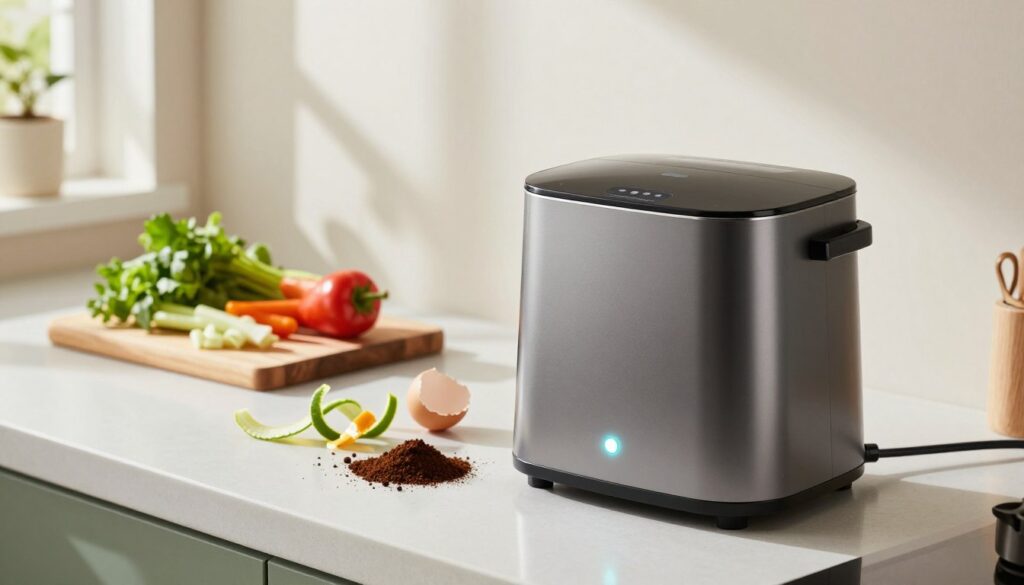
Turning food scraps into useful material at home is good for you and the planet. Electric kitchen composters help cut down on household waste. They also offer a quick and clean way to recycle kitchen leftovers.
Reduce landfill waste and lower household carbon footprint
Keeping scraps out of trash helps reduce methane emissions. Methane traps heat more than carbon dioxide. This change is important for the environment.
Using an indoor unit changes decomposition from a landfill process to a controlled one. This reduces landfill waste and lowers carbon impact. It also cuts down on waste collection and transport costs.
Cities like Seattle and San Francisco aim to reduce waste. Choosing an electric kitchen composter helps meet these goals. It also reduces your own waste footprint.
Convenience, speed, and year-round composting
Electric units are made for daily use. They have sealed containers that control odor and keep pests away. This makes composting possible in apartments and condos.
Cycle times vary, but electric machines can turn scraps into compost in hours to days. This is faster than traditional backyard methods that take months.
With an electric composter, you can compost all year. This is a big plus for urban gardeners and busy households.
Potential cost savings and gardening benefits
Running an electric kitchen composter can save on garbage bags. In places that charge by trash volume, fewer pickups mean lower fees.
Finished compost improves potting mixes and soil structure. This reduces the need for store-bought fertilizers. It also helps container gardens, houseplants, and raised beds grow well.
Note that countertop-processed compost can be drier and coarser. You might need to blend it with yard waste or a small pile before using it in vegetable beds.
Choosing top rated electric kitchen composters offers a practical way to reduce landfill waste. You’ll enjoy faster, cleaner composting and savings for your garden and household.
Electric kitchen composter comparison and electric kitchen composter reviews
When looking for an electric kitchen composter, a checklist helps. Look at capacity, cycle time, and what waste it can handle. Also, consider how it controls odors, filter costs, and energy use.
Check the noise level, size, and materials. Don’t forget warranty length and total cost. This helps you compare and choose before reading reviews.
How to compare models: checklist and criteria
First, think about the size you need. Small spaces need compact units, while bigger families need larger ones.
Next, look at cycle time and how it processes waste. Faster cycles are better for busy kitchens. The method affects smell and quality of the compost.
See what types of waste it can handle. Some can take meat and dairy, while others only accept fruits and veggies.
Check how it controls odors. Options include sealed drums, filters, and enzymes. Remember to consider how often you’ll need to replace filters.
Compare energy use and noise levels. Quiet models are better for open-plan homes. Also, check the materials and size.
Look at warranty length and total cost. Add in the cost of filters and liners over a year. Consider what’s most important to you, like odor control or capacity.
Real-world reviews: user experience, reliability, and common complaints
Users like models that reduce waste and control smells. They also appreciate how fast and easy they are to use.
But, there are complaints. Issues include high filter costs, noise, limited capacity, and mechanical problems with heavy use. These problems are common across brands.
Some brands are known for being durable and having good customer support in the US. New brands offer smart features but may not have a long track record. Check reviews from Wirecutter and Consumer Reports for insights.
When reading reviews, look for overall ratings and feedback from long-term users. Focus on reviews from US buyers for relevant service and parts.
Where to buy and warranty/customer support considerations
Choose models with at least a one-year warranty and US-based support. Make sure you can return it and that parts are available. Check if it works with US voltage and if shipping covers your state.
Before buying, compare different models and read reviews. This will help you find the best composter for your kitchen.
Conclusion
In this ultimate guide to electric kitchen composters, you’ve learned how they quickly turn food scraps into soil. The best ones are fast, control odors well, and are easy to keep up. Reviews show you’ll have to choose between size, speed, and cost.
When picking one, think about how much waste your home makes and how fast you need it processed. Apartments might want models that don’t smell and save money. If your kitchen is open, consider how loud and energy-hungry it is.
Now, compare the top models against what you need. Read reviews from the U.S. to see how reliable they are. Think about the total cost, including filters and energy, before you buy. Start with a cheap one if you’re new to composting. For more waste, quieter operation, or lasting quality, go for a pricier model.